Wildfires Are Rising. So Are the Solutions.
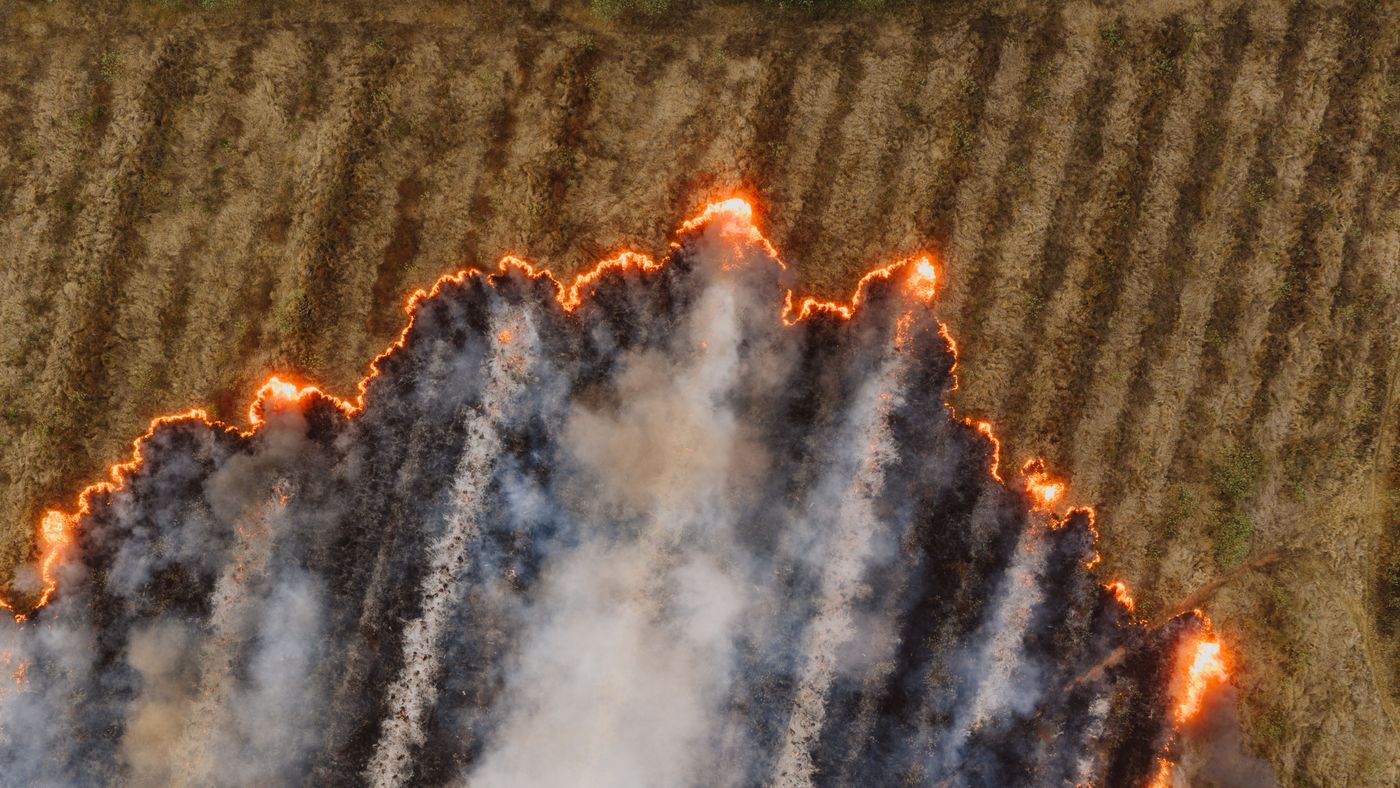
Fires six stories high. Entire communities evacuated. Homes destroyed. Wildfires have been raging across France and Spain for more than a week. These recurring infernos are a stark reminder that environmental challenges are no longer someone else's problem – they are a reality affecting communities across the world.
Wildfires are becoming more frequent and, in many regions, more intense as climate change creates hotter, drier conditions, extends fire seasons, and increases the likelihood of extreme fire weather. At the same time, changing land use, decades of fire suppression, and the spread of highly flammable invasive plant species are adding more fuel to landscapes that are already under pressure. Together, these factors are increasing the risk of large, fast-moving fires that threaten lives, biodiversity, and livelihoods. Global data shows that forest fires now burn more than twice as much tree cover as they did 20 years ago, while Europe has experienced increasingly destructive wildfire seasons in recent years.
-1.png)
But this is not just a story about risk. Around the world, young innovators are developing practical, scalable solutions that help communities become more resilient. From restoring ecosystems and removing invasive species to using artificial intelligence and drones for early detection, these ideas demonstrate that while wildfires may be becoming more complex, our ability to prepare for them is growing too.
Tackling Wildfire Risk by Restoring Ecosystems
Not every wildfire starts with a spark alone. The condition of the landscape plays a major role in determining whether a small fire quickly burns out or grows into a devastating blaze.
In the US, our Cohort 3 Fellow Lorena James is addressing one often-overlooked contributor to wildfire risk: invasive plant species. Through her project, Invasive Impact Initiatives, Lorena works to remove invasive plants that create dense, highly flammable vegetation, allowing fires to spread more rapidly and burn more intensely.
But her work goes beyond removal. Instead of sending this biomass to landfill, she explores ways to upcycle invasive species into useful products, creating environmental and economic value at the same time. This approach demonstrates how ecosystem restoration can reduce wildfire risk while supporting more circular, sustainable local economies.
Healthy, biodiverse ecosystems are naturally more resilient. By restoring native habitats and reducing excess fuel loads, projects like Lorena's show that prevention can begin long before fire season arrives.
Using AI to Stay One Step Ahead
Once a wildfire ignites, every minute matters. That is why researchers and innovators are increasingly turning to AI to improve how fires are predicted and managed.
In Chile, Cohort 3 Fellow Matías Nicolás Sánchez Adam is building Fire Sentinel, an accessible early-warning/monitoring system for communities highly exposed to extreme heat, drought, and wildfire. His project combines satellite data, distributed sensors, drones, and machine learning to enable early risk detection of wildfires, generating predictive and actionable intelligence for faster and more effective response

The project also seeks to make advanced environmental technologies more accessible for territories and communities that often lack the infrastructure or financial resources to implement these types of systems. AI is increasingly recognised as a powerful tool in wildfire management because it can process large volumes of weather, vegetation, and satellite data far faster than traditional methods. Rather than replacing firefighters, AI helps them make faster, more informed decisions when every second counts.
In Kenya, Cohort 3 Fellow Ian Mwaniki Kanyi is combining drone technology with thermal imaging to identify fires before they become emergencies. His drone system, powered by the open-source ArduPilot platform, continuously monitors forested areas using thermal cameras capable of detecting abnormal heat signatures. When a potential fire is identified, the system sends real-time alerts to emergency responders, allowing action to be taken while fires are still small and manageable.

Building Communities That Can Adapt
Technology is only one part of the solution. Building wildfire resilience also means ensuring that communities have the knowledge, skills, and infrastructure needed to adapt to a changing climate.
In India, beVisioneers Fellow Trisa Bhattacharjee works with vulnerable communities in the Himalayan region, where increasing risks from wildfires, landslides, and flooding are forcing many people to reconsider where and how they live. Through her work on ecosystem-based adaptation, Trisa collaborates with schools and local communities to promote sustainable ecological practices and climate education. She also supports efforts to develop housing that is better able to withstand environmental hazards, helping communities prepare for multiple climate risks rather than responding only after disasters occur.

Her work highlights an important truth: resilience is about more than emergency response. It is about empowering communities with the knowledge, resources, and confidence to face an uncertain future together.
A Future Built on Prevention
As our climate changes, many regions will continue to experience hotter, drier conditions that increase fire risk. But rising risk does not mean inevitable catastrophe. Around the world, young innovators are demonstrating that prevention is possible. By restoring ecosystems, harnessing artificial intelligence, improving early detection, and strengthening community resilience, they are building solutions that address wildfires before they become disasters.
The challenge ahead is significant, but so is the creativity and determination of the next generation. Their work reminds us that climate resilience is not built through a single breakthrough, but through thousands of practical ideas working together.
At beVisioneers: The Mercedes-Benz Fellowship, we are searching for solutions that combat extreme climate conditions like wildfires. Cohort 5 applications open later this year, and we'll be on the lookout for young innovators with bold ideas or prototypes that can help combat, prevent, and protect us from wildfires.
Sources
European Commission: https://joint-research-centre.ec.europa.eu/projects-and-activities/natural-and-man-made-hazards/forest-fires/current-wildfire-situation-europe_en
World Resources Institute: https://www.wri.org/insights/global-trends-forest-fires
World Meteorological Organization: https://public.wmo.int/media/news-from-members/particulate-matter-from-wildfires-causes-globally-over-100000-annual-deaths-impacts-of-fire-smoke
Climate Change post: https://www.climatechangepost.com/news/economic-damage-of-wildfires-in-southern-europe-is-up-to-21-billion-per-season-on-average